Sightglass
part of MaracaiboA camera that reads the diesel sight glass, because the tanks predate sensors.
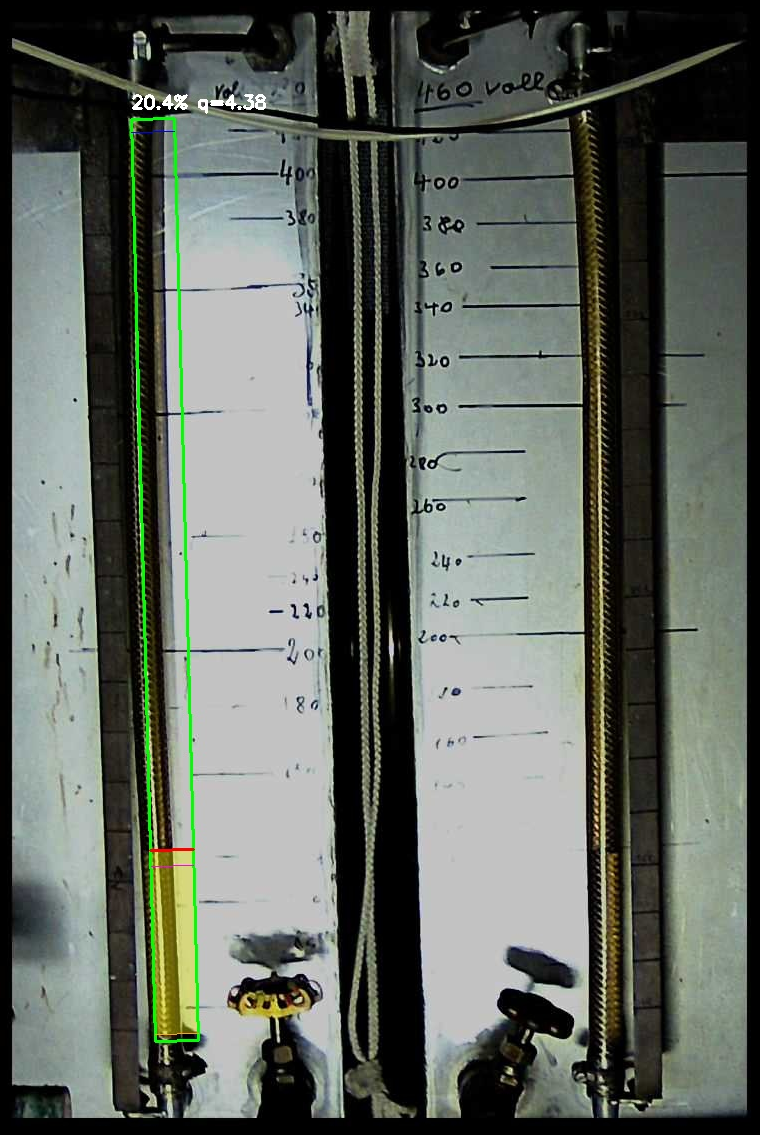
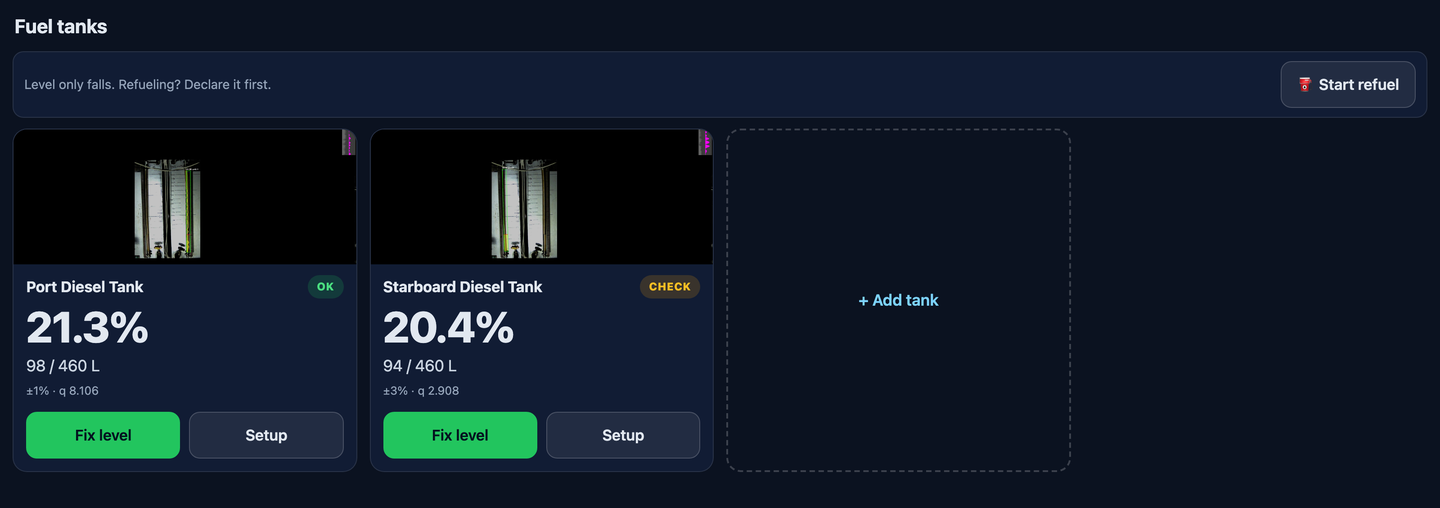
The boat’s fuel tanks are older than the idea of a fuel sensor — but they have a sight glass, and a sight glass can be looked at. So a small camera watches both glasses, a vision model reads the level off the image, and the result publishes as an ordinary MQTT sensor. One safeguard worth stealing: a diesel level only falls, so when the camera suddenly reads higher the number freezes until a refill is declared — a wrong reading is worse than no reading.
- A tank going dark now announces itself
- Level only rises after a declared refill
- Level only changes on confident readings
- Kalman filtering, ArUco calibration, mobile UI
- Claude vision replaces local computer vision
- Vision-language model joins the detector
- Tank levels published to SignalK over MQTT
- Camera reads the boat's fuel sight glass
- Diesel only goes down
Decision. The published fuel level on the boat can only fall. It rises for exactly one reason: I declare a refill through an explicit door…
- One tank read 10% high for weeks. The detector was never wrong.
Sightglass watches the diesel sight tubes on the boat with a camera. Starboard read ~10% high for weeks. I kept tuning thresholds; the…
- A physical invariant is a free hallucination detector
Sightglass is a Raspberry Pi pointing two cameras (via go2rtc) at the diesel sight glasses on my 1967 boat; a vision model reads the fuel…